Combat Flow Mastery | Stay Calm, Strike Smart
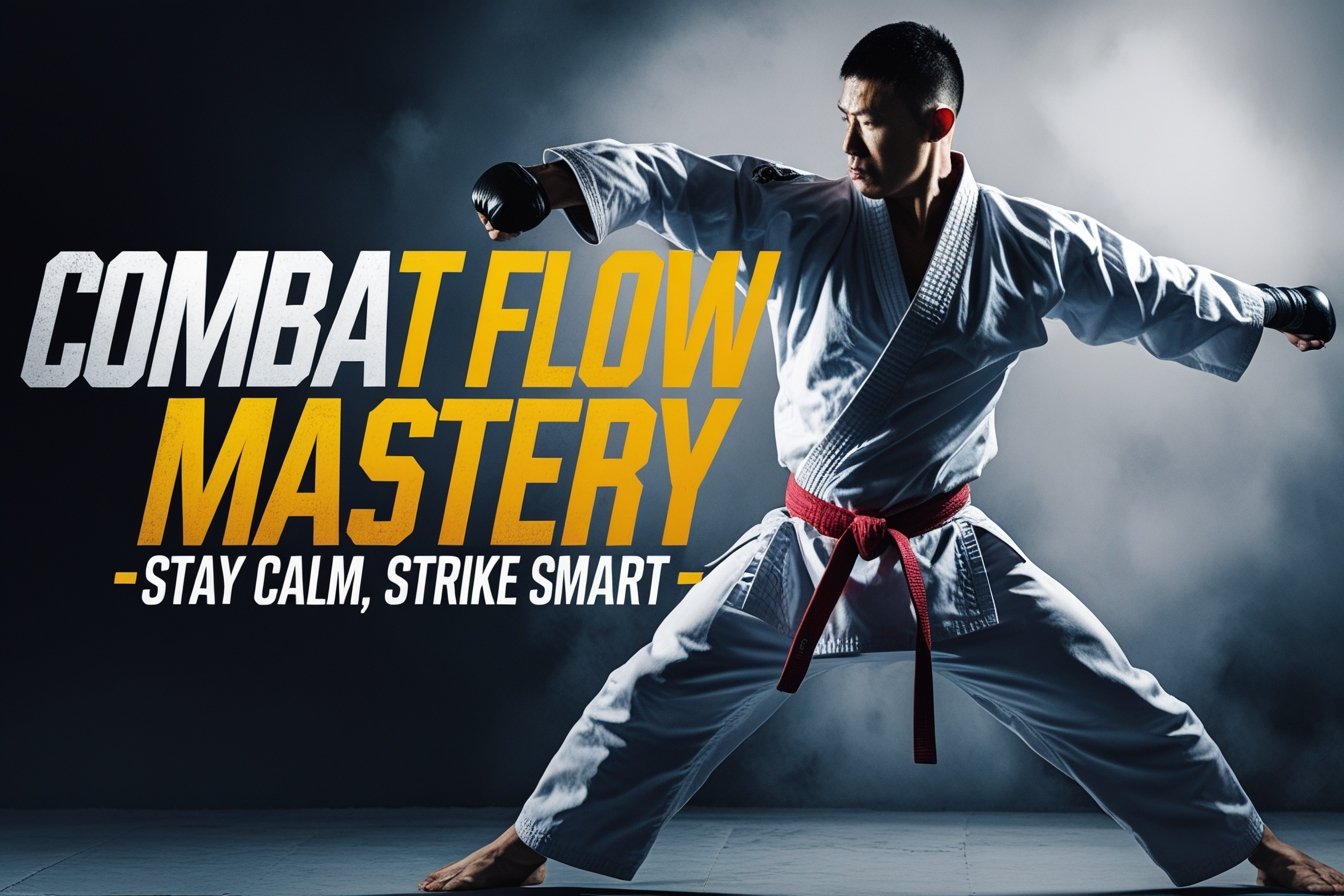
What separates elite fighters from weekend warriors isn’t just physical skill, it’s their ability to maintain combat flow while chaos erupts around them. True martial arts mastery emerges when your mind becomes a tactical computer, processing threats and opportunities faster than conscious thought can follow.
The Neurological Architecture of Combat Excellence:
Combat flow isn’t mystical, it’s a specific neurological state where your prefrontal cortex downregulates while your motor cortex and visual processing centers hyperactivate. This neural shift creates the conditions for tactical awareness that appears almost supernatural to observers. Understanding this brain state transformation is the first step toward mastering it.
Your amygdala, the brain’s alarm system, normally triggers fight-or-flight responses that flood your system with stress hormones. Skilled fighters learn to modulate this response, allowing just enough arousal to enhance performance without triggering the tunnel vision and motor control degradation that accompanies panic. This delicate balance requires specific training protocols that most traditional martial arts overlook.
The default mode network, responsible for self-referential thinking and internal dialogue, becomes dramatically suppressed during peak combat performance. This suppression eliminates the mental chatter that typically interferes with split-second decision-making. Advanced practitioners learn to access this state voluntarily, creating a competitive advantage that extends far beyond physical techniques.
Neuroplasticity research reveals that combat training rewires your brain’s threat assessment systems. Regular exposure to controlled stress situations strengthens the connections between your sensory processing centers and motor response systems, creating faster, more accurate reactions. This neurological adaptation explains why experienced fighters seem to anticipate attacks before they happen.
Mastering Perceptual Acceleration:
Combat flow mastery includes the ability to manipulate your perception of time during high-stress encounters. This isn’t imagination, it’s a measurable neurological phenomenon where your brain’s temporal processing speeds up, creating the sensation that events are unfolding in slow motion.
Elite fighters develop this temporal distortion through specific training methods that gradually increase cognitive load while maintaining movement precision. Tactical drills that combine multiple decision points with physical execution teach your brain to process information more efficiently under pressure. The result is an expanded reaction time that provides crucial advantages in combat situations.
Visual processing acceleration accompanies temporal dilation, allowing you to gather more information from your environment in shorter time frames. Advanced practitioners learn to expand their visual field while simultaneously increasing detail recognition. This dual enhancement creates a tactical awareness that borders on prescient, allowing recognition of threats and opportunities that others miss entirely.
The key to developing perceptual acceleration lies in controlled overload training. By gradually increasing the complexity and speed of training scenarios, you force your nervous system to adapt by processing information more efficiently. Smart training protocols systematically challenge your cognitive processing speed while maintaining safety margins that allow for sustainable development.
Building Unshakeable Mental Resilience:
Combat psychology research reveals that mental resilience isn’t innate, it’s a trained adaptation that develops through progressive stress exposure. Military and law enforcement training programs use stress inoculation protocols that gradually build tolerance to high-pressure situations while maintaining tactical thinking capability.
The physiological markers of stress, elevated heart rate, altered breathing patterns, and muscle tension, can be trained responses rather than uncontrollable reactions. Tactical breathing techniques used by special operations forces create immediate physiological changes that support optimal performance under pressure. These aren’t simple relaxation exercises; they’re precision tools for nervous system regulation.
Cognitive load management becomes crucial when multiple threats require simultaneous attention. Advanced tactical training teaches practitioners to prioritize information processing, focusing mental resources on the most critical elements while maintaining peripheral awareness of secondary threats. This skill prevents cognitive overload that can lead to decision paralysis.
Stress inoculation training must include both physical and psychological stressors to be effective. Physical exhaustion, time pressure, and environmental challenges combined with tactical decision-making create the conditions necessary for building real-world resilience. Training that omits these elements fails to prepare practitioners for actual combat situations.
Tactical Aggression vs. Emotional Reactivity:
Combat effectiveness requires understanding the difference between tactical aggression and emotional reactivity. Tactical aggression is calculated, controlled, and purposeful, it’s the mindset of a predator stalking prey. Emotional reactivity is chaotic, wasteful, and predictable, it’s the mindset of panicked prey.
Elite fighters develop what special operations forces call “controlled aggression”, the ability to maintain calm tactical thinking while executing violent actions. This psychological state allows for rapid escalation and de-escalation based on situational requirements. Tactical mindset training teaches practitioners to access this state voluntarily rather than hoping it emerges naturally.
The predator’s mindset includes constant environmental scanning and threat assessment. Situational awareness protocols teach practitioners to maintain 360-degree awareness while focusing on immediate threats. This dual-focus capability prevents tunnel vision while ensuring primary threats receive appropriate attention.
Decision-making under pressure requires pre-programmed response patterns that bypass conscious analysis. Combat veterans develop these patterns through repetitive training that creates automatic responses to common threat scenarios. This automation frees cognitive resources for novel situations that require creative problem-solving.
Hacking Your Autonomic Responses:
Combat flow requires precise management of your autonomic nervous system responses. Heart rate variability, breathing patterns, and muscle tension directly impact your ability to maintain tactical awareness and execute complex movements under pressure. Understanding these relationships allows for real-time performance optimization.
Optimal fighting performance occurs within specific heart rate ranges that vary by individual and situation type. Most practitioners perform best between 115-145 beats per minute, where cognitive function remains sharp while physical capability peaks. Training with heart rate monitoring teaches you to recognize and maintain these optimal zones.
Breathing patterns directly influence your nervous system state and can be manipulated to enhance performance. Tactical breathing protocols include specific patterns for different combat phases, preparation, engagement, and recovery. These patterns optimize oxygen delivery while maintaining nervous system control.
Muscle tension patterns affect both movement efficiency and injury risk. Advanced practitioners learn to maintain just enough tension for power generation while avoiding the rigidity that slows movement and increases injury risk. This precision tension control becomes automatic through specific training protocols.
Using Space as a Tactical Weapon:
Combat mastery extends beyond personal techniques to include sophisticated use of environmental factors. Lighting, terrain, obstacles, and spatial relationships all become tactical tools when properly understood and utilized. This environmental integration separates advanced practitioners from technique collectors.
Spatial awareness includes understanding distance management, angle creation, and positioning advantages. Tactical positioning principles teach practitioners to use space to create advantages while limiting opponent options. This chess-like approach to physical positioning multiplies the effectiveness of basic techniques.
Environmental obstacles can become defensive tools or offensive weapons depending on tactical understanding. Advanced training includes scenarios that teach practitioners to use walls, furniture, and terrain features as force multipliers. This environmental integration requires specific training that most traditional martial arts neglect.
Lighting conditions dramatically affect visual processing and tactical options. Night fighting techniques include specific adaptations for low-light conditions that maintain tactical effectiveness when visibility is compromised. These skills prove crucial in real-world self-defense situations where lighting is rarely optimal.
The Mental Chess Game of Combat:
Elite combat performance includes sophisticated psychological tactics that create mental advantages before physical contact occurs. Body language, positioning, timing, and even breathing patterns can be used to influence opponent psychology and create tactical openings.
Intimidation tactics work through specific psychological mechanisms that can be understood and countered. Advanced practitioners learn to recognize intimidation attempts and respond in ways that neutralize psychological pressure while maintaining tactical advantage. This psychological resilience proves crucial in high-stakes situations.
Misdirection and feinting create opportunities by manipulating the opponent’s attention and expectations. Tactical deception techniques teach practitioners to use false signals and setup patterns that create openings for decisive actions. These psychological tools multiply the effectiveness of physical techniques.
Reading opponent psychology requires understanding behavioral patterns that reveal intentions and emotional states. Behavioral analysis skills teach practitioners to recognize pre-attack indicators, stress responses, and decision-making patterns that provide tactical advantages. This psychological intelligence gathering proves invaluable in both training and real-world applications.
Maintaining Peak Performance Under Extended Stress:
Combat situations rarely involve single, isolated encounters. The ability to maintain peak performance through multiple engagements requires specific recovery protocols that restore physical and mental resources quickly. These protocols prove crucial for both training and real-world applications.
Immediate post-engagement recovery includes specific breathing patterns and movement sequences that restore nervous system balance while maintaining tactical readiness. Tactical recovery protocols teach practitioners to downregulate stress responses without completely relaxing vigilance. This balanced recovery maintains readiness while preventing stress accumulation.
Mental reset techniques allow practitioners to clear psychological residue from previous encounters while maintaining tactical awareness. Cognitive recovery protocols include specific mental exercises that restore focus and decision-making capability between engagements. These techniques prevent cognitive fatigue that can compromise performance in extended situations.
Physical recovery between engagements requires understanding how to restore energy systems while maintaining muscle readiness. Tactical conditioning includes specific protocols for managing lactate accumulation, muscle tension, and energy system recovery that maintain performance capability through extended encounters.
Conclusion:
Combat flow mastery transforms chaotic violence into calculated precision. When you understand the neurological, psychological, and tactical elements that create peak performance under pressure, every encounter becomes an opportunity to demonstrate your skills rather than test your survival.
FAQs:
Q1: How long does it take to develop combat flow mastery?
A: Most practitioners see significant improvements within 6-12 months of focused training, with mastery developing over several years.
Q2: Can combat flow skills be learned without martial arts training?
A: Yes, the psychological and tactical principles apply to any high-stress situation requiring quick decision-making.
Q3: Is combat flow the same as being aggressive?
A: No, combat flow is controlled tactical awareness—aggression is emotional reactivity that reduces effectiveness.
Q4: Do I need special equipment to train combat flow?
A: Basic training requires no equipment, though heart rate monitors and stress inoculation tools can accelerate development.
Q5: Can older adults develop combat flow skills?
A: Absolutely—the neurological and tactical aspects of combat flow can be developed at any age.
Q6: How do I know if I’m in a combat flow state?
A: Combat flow feels like time slowing down, effortless movement, and crystal-clear tactical awareness without mental chatter.