Diving in Football | Skill or Cheating?
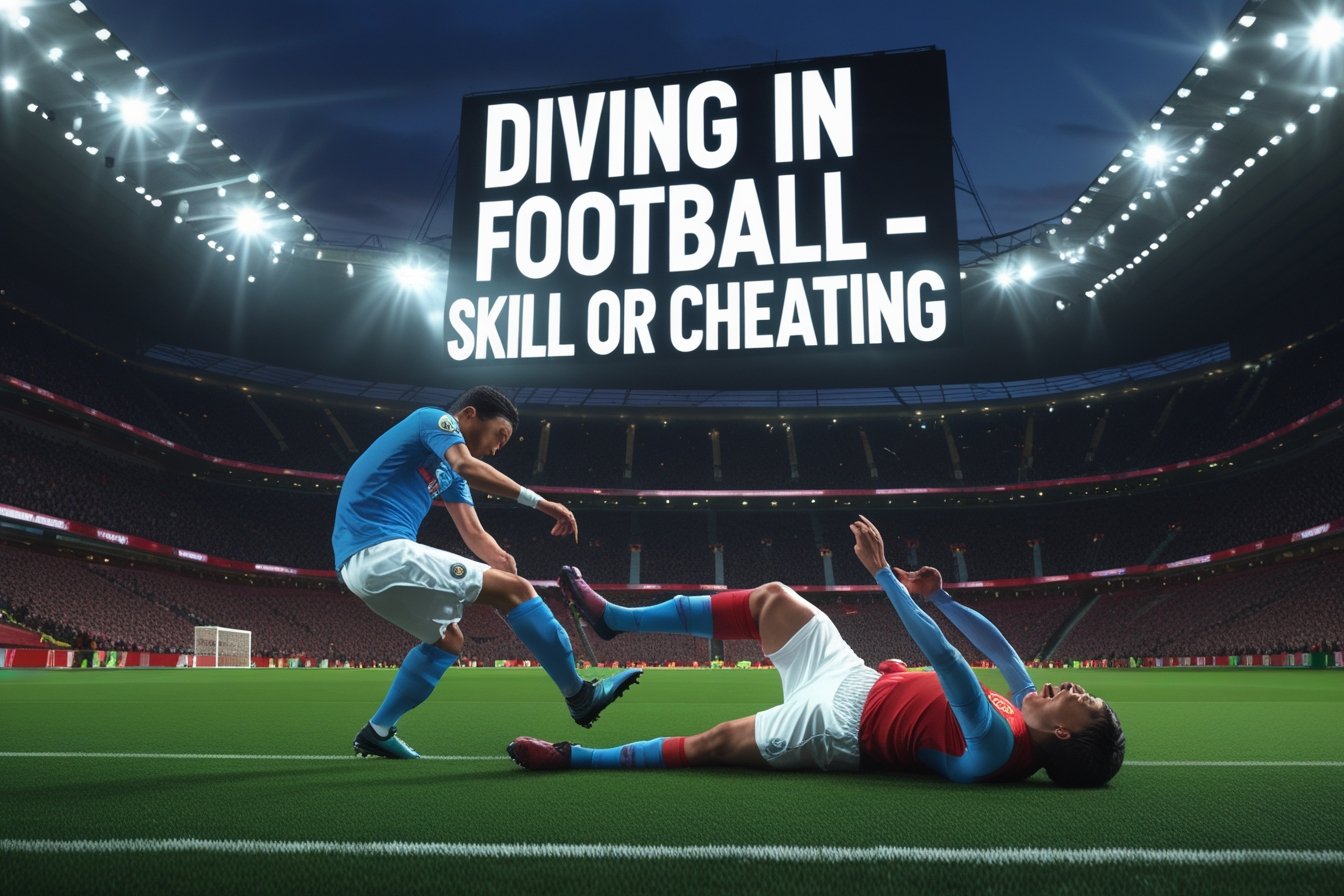
Imagine a lethal striker clutching his ankle in the penalty box, the stadium erupts, and suddenly the fate of an entire season pivots on a single fall, yet was it real or a masterful act of diving? In the high-stakes world of football, simulation blurs the lines between artistry and cheating, raising fierce debate: Is theatrical falling a legitimate tactical ploy or a stain on the sport’s spirit? This article examines the anatomy of a dive, unpacks why players risk shame for advantage, explores how referees and VAR chase out deception, and surveys efforts to restore fair play to the beautiful game.
The Art and Anatomy of a Dive:
A convincing dive begins the moment a forward senses minimal contact. Shoulders dip, a dramatic jolt ripples through muscle memory, and eyes shoot toward the referee with pained urgency. This choreography demands timing, athleticism, and psychological insight: the tumbler studies replays to refine tumble angles and facial expressions that trigger whistle-blowers. Top performers can feign impact so flawlessly that even veteran officials hesitate.
In some corners of the world, mimed collisions become almost ritualized, a dark ballet designed to force free kicks or game-changing penalties. Yet whether hailed as a flair for dramatic gamesmanship or derided as a breach of integrity, diving reveals how finely honed the intersection of performance and sport can become.
When Simulation Meets Strategy:
Far from random theatrics, tactical diving feeds into broader match strategies. In crunch moments, trailing by one goal, chasing a title, players calculate that winning a penalty can outweigh risking a yellow card. Teams train attackers in subtle simulations, instructing them to exploit known referee blind spots or opponents’ tackling habits. Defensive units, anticipating dives, adapt by feigning contact themselves to deter simulation.
Managers sometimes lean into the grey area, encouraging “soft challenges” that invite dramatic responses. As the margins between victory and defeat shrink, dive-engineered set pieces and time-wasting theatrics become a raw but calculated weapon in the manager’s arsenal.
The Ethical Drawline:
At its core, diving raises a fundamental question about sporting ethics: can bending rules still honor the spirit of competition? Proponents argue that simulation is simply another facet of intelligent football, a way to seize advantage within the law’s margins. Critics counter that diving erodes trust, fuels cynicism, and disrespects honest challenges.
When fans chant “no more acting,” they demand authenticity; when pundits debate whether to applaud deception, they confront the sport’s moral fault lines. Across clubs and countries, this ethical tug-of-war shapes how players, coaches, and supporters view simulation: as either a clever devilry or a toxic undercurrent that sullies fair play.
From Ref Lenses to VAR:
Referees once relied solely on instinct and positioning, penalizing obvious tumbles or wild theatrics. The advent of VAR added a technological backstop, reviewing incidents frame by frame to confirm or overturn decisions. Yet even with slow-motion replays, pinpointing intent remains subjective. Was the defender’s studs-first lunge a genuine foul or a brush-off exploited by cunning?
Some leagues have introduced post-match review systems that issue retrospective yellow cards for clear dives, a deterrent that smacks of after-the-fact justice. Training programs now simulate dive scenarios to sharpen refereeing radar, and artificial-intelligence prototypes analyze body kinematics for telltale dive signatures. Still, minds and bodies willing to deceive often stay one step ahead of the chase.
Why Players Choose to Dive:
Why risk public shame and potential discipline to flop on the grass? Pressure drives much of the behavior. Sky-high salaries, perilous relegation battles, and global media scrutiny amplify every action into a high-stakes gamble. A single penalty can bolster a player’s market value or swing club finances by millions. Cultural factors also play a role: in some leagues, simulation has become an accepted, if unsavory, norm, and new recruits learn the local style of theatrical response almost as soon as they sign.
For less gifted players, a well-timed dive can level the playing field against stronger opponents. In essence, a dive represents risk-return calculus: if the reward, another goal, a stoppage, or an opponent booked, outweighs the backlash, many choose to tumble.
Reform and Resistance:
Football’s custodians recognize that unchecked diving siphons enjoyment from fans and jeopardizes the sport’s reputation. FIFA and UEFA periodically update the Laws of the Game, delegating stricter punishments for simulation to referees and match delegates. Some associations experiment with in-game dive alarms, vibrating wristbands for referees when AI flags dubious falls in real time.
Education campaigns target youth leagues, teaching budding players the value of honest contests and role-model behavior. Meanwhile, fan forums and social media amplify calls for integrity, shaming repeat offenders into more cautious theatrics. Though eradication seems unlikely, this layered approach of policy, technology, and cultural pressure aims to tip the scales back toward authenticity and restore fair play.
Conclusion:
As the line between performance and cheating blurs on stadium turf, diving remains one of football’s most contentious battlegrounds. From pelvic flips crafted in youth academies to VAR-fueled reversals on grand stages, simulation challenges our notions of skill, strategy, and ethics. While some argue that cunning falls are as integral to the game as clever dribbles, others insist that only genuine competition deserves the beautiful game’s proudest moments. Ultimately, the quest for fair play hinges on evolving tactics, vigilant officiating, and a shared commitment among players, coaches, and fans to keep the theatre on the fringe and the sport’s integrity center stage.
FAQs:
1. What is diving in football?
Feigning a foul to deceive the referee for an advantage.
2. Is diving considered cheating?
Yes—simulation intentionally breaks the spirit of fair play.
3. How do referees punish dives?
They issue yellow cards for unsporting behavior when spotted.
4. Can VAR catch all dives?
No, subjective intent still makes some dives hard to detect.
5. Why do players risk their reputation for a dive?
High rewards like penalties or time-wasting often outweigh the shame.
6. Will diving ever be eliminated?
Unlikely; a mix of rules, tech, and culture change can only reduce it.